
Wire Brushes
You’ll find the best wire brush for every application at Solo Horton. Whether you need to remove rust, strip paint, deburr metal, or clean away oil and grease, we’ve got wire brushes that can handle the task, available in many sizes, styles, and materials.
For delicate cleaning and lint removal, choose a wire brush with soft yet sturdy bristles made of nylon, horsehair, or Tampico. For heavy-duty industrial applications like scouring and scale removal, brass or stainless steel bristles are ideal for getting the job done efficiently and effectively. All bristles are tightly set in place with solvent-resistant epoxy. With Solo Horton, you’ll get the highest quality wire brushes at fair prices. Our products are built for durability and performance, providing exceptional results, every time.
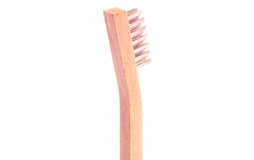
What is a toothbrush-style wire brush?
A toothbrush-style wire brush is a small, handheld brush with a narrow head and short handle, similar in shape to a household toothbrush. It’s designed for detailed work in tight spaces where precision matters. These brushes are commonly used to remove rust, clean weld seams, scrub threads, or prep small metal parts before painting or assembly. Their compact size gives you better control, making them ideal for spot cleaning, touch-ups, and maintenance tasks.
How are toothbrush-style and long-handled wire brushes different from regular wire brushes?
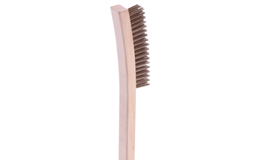
Toothbrush-style and long-handled wire brushes are both designed for hand use and precision work. Long wire brushes provide extra reach for accessing deeper areas, while toothbrush-style brushes offer greater control for detailed cleaning.
Regular wire brushes, on the other hand, often include larger block brushes, cup brushes, or wheel brushes that may be used by hand or with power tools. The larger wire brushes, especially those used with drills or grinders, are better suited for covering broader surfaces quickly.
What materials are your wire cleaning brushes made from?
Solo Horton’s wire brushes are available with a variety of bristle types, including stainless steel, carbon steel, brass, horsehair, and nylon.
What are the differences between brass, horsehair, nylon, and stainless steel bristles? Each type of bristle serves a different purpose:
- Stainless steel bristles are strong and corrosion-resistant, making them ideal for aggressive cleaning and rust removal, especially on stainless surfaces.
- Brass bristles are softer and non-sparking, making them suitable for lighter cleaning and softer metals.
- Nylon bristles are flexible and often used for light-duty cleaning or applying solvents.
- Horsehair bristles are very soft and typically used for gentle dusting or applying finishes rather than heavy material removal.
What surfaces can I use a wire brush on?
Wire brushes are most commonly used on metal surfaces, including steel, stainless steel, aluminum, and iron. They are effective for removing rust, scale, paint, slag, and heavy buildup. Depending on the bristle material, they can also be used on concrete, masonry, and some durable plastics. Always match the brush type to the surface and task. Using the correct bristle material helps ensure efficient cleaning without causing unnecessary surface damage.
Are industrial wire brushes safe for delicate surfaces?
It depends on the bristle material and the amount of pressure applied. Steel wire brushes can be aggressive and may scratch or gouge softer metals or finished surfaces. For more delicate applications, brass, nylon, or other softer bristles are usually a better choice. If you’re working on coated, polished, or soft materials, start with a less aggressive brush and test in a small area first to prevent damage.
What size wire brushes do you carry?
Solo Horton stocks wire cleaning brushes in a wide range of sizes. Our smaller options can be found in the Toothbrush-Style Wire Brushes category; many of these feature a brush part length of 1 ½” long, with bristles ½” in length, making them perfect for working in small spaces and with small parts.
For long wire brushes, check out our 203/303/210 Scratch Brush, which features carbon steel or stainless steel bristles that are 1 3/16” in length. Our largest wire brush is the 918 Oversized Halftone Cleaning Brush, with a 2 5/8” x 6 ½” wood block that can be comfortably used for a variety of cleaning tasks.
How long do industrial wire brushes typically last?
The lifespan of a wire brush depends on the bristle material, the surface being cleaned, and how much pressure is applied during use. Aggressive tasks like heavy rust removal will wear brushes down faster than light cleaning. Power-tool brushes generally wear more quickly than hand brushes due to higher speeds and friction. Regular inspection of your wire brushes is important. If bristles become bent, flattened, or uneven, it’s time to replace the brush for safe and effective performance.
Do you stock plater brushes?
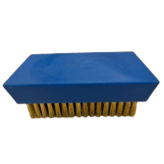
Yes. Hand brushes that are densely packed with fine-wire bristles, also known as plater brushes, are ideal for gentle cleaning and polishing without scratching. Solo Horton’s 916 Halftone Wire Cleaning Brush is a great option for these types of tasks. The 916SS has the softest stainless steel bristles available, at just .003” in diameter. For more delicate jobs, choose nylon or horsehair bristles.
Not finding a product for your specific application?
Please call us to discuss your project.